Active leak: what to do before we arrive
If water is coming through a ceiling, running down a wall or pooling on the floor, close the main shutoff valve first. In many Coppell homes it sits on an exterior wall near the front, or in the garage where the supply enters the house. Turn it clockwise until it stops.
Then switch off power to the affected room at the breaker if water is near outlets or light fixtures, move valuables, and put a bucket under any ceiling bulge. Do not poke a hole in a bulging ceiling near light fixtures. Call us and describe where the water is and how fast it is coming.
Meter still running with everything off
The fastest do-it-yourself test uses your water meter. Turn off every tap and appliance, then watch the meter. Coppell explains that the right-most digit on the meter is the leak indicator, and if it keeps moving while nothing runs, water is leaking somewhere between the meter and the house or inside it.
Next, shut the main valve at the house and look again. If the meter stops, the leak is inside the home. If it keeps moving with the valve closed, the loss is on the buried line between the meter and the house, which is the homeowner side of the connection. Tell us which result you saw and the call goes faster.
A high water bill and what it can mean
A bill that jumps with no change in habits is one of the most common reasons people call. Toilet flappers that leak into the bowl, irrigation zones stuck on, a leaking water heater relief valve and a slow slab leak all look the same on paper, which is a larger number than last month.
Coppell lists a leak repair affidavit that can be used once every 24 months, and the number given for it is 972-304-3695. Terms change, so confirm what the city requires, and keep the plumber invoice and the repair date, since those are usually the paperwork behind any adjustment request.
Symptoms and where the leak usually is
This table is how our dispatchers sort calls. It is a starting guide and the plumber confirms the cause on site.
| What you notice | Likely location | Next step |
|---|---|---|
| Meter moves with all taps off | Service line, house supply or a running toilet | Meter test, then isolate with the main valve |
| Warm spot on the floor, hot water bill up | Hot line under the slab, see slab leak repair | Electronic tracing under the floor |
| Ceiling stain that grows after showers | Drain or supply above the ceiling | Moisture mapping and access hole |
| Soggy patch in the yard near the meter | Buried service line | Pipe locating and line test |
| Sudden low pressure | Leak, closed valve or regulator fault | Pressure gauge check at the hose bib |
| Water running sound at night | Toilet, supply line or hidden pipe | Fixture checks, then listening gear |
Leak detection tools we use
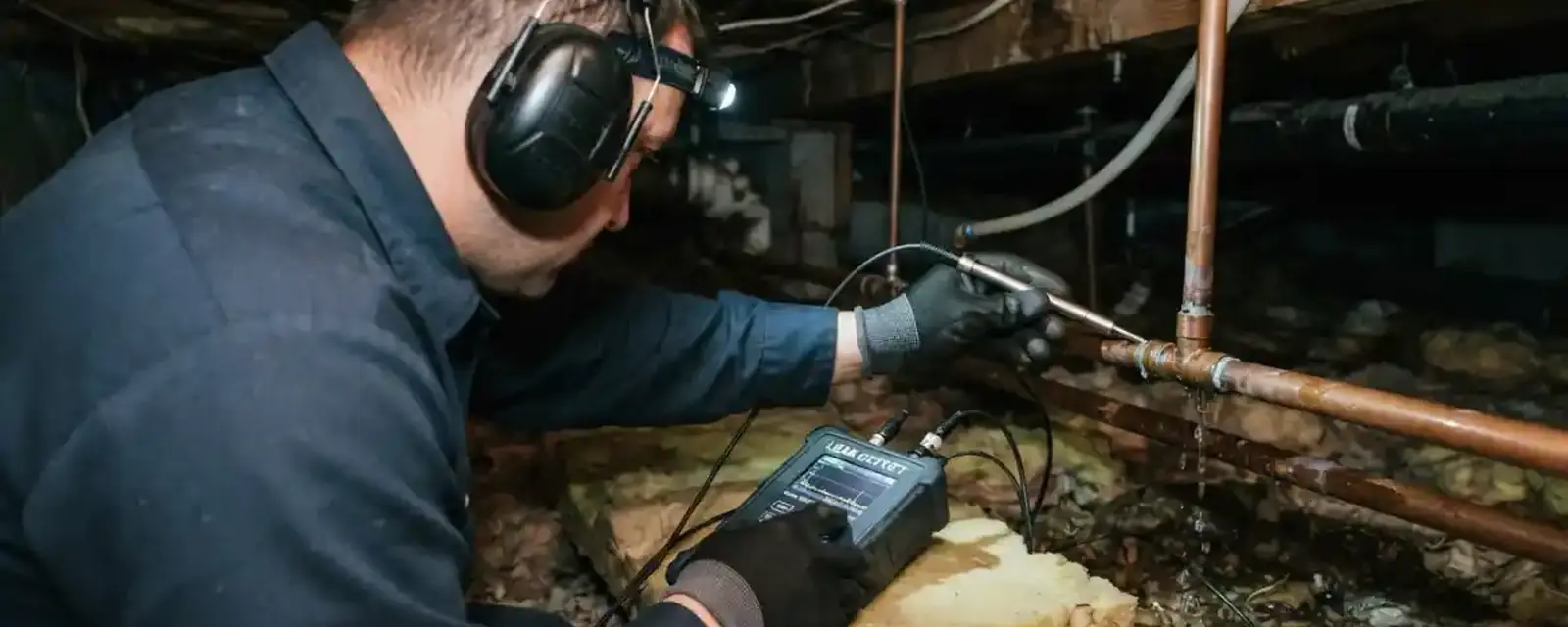
- Acoustic listening gear that hears the hiss of pressurized pipe through slab, wall and soil.
- Thermal imaging to spot warm hot-water lines and cool wet drywall.
- Moisture meters that map wet areas before anyone cuts a hole.
- Pressure testing that isolates a line and shows if it holds.
- Sewer camera work on drain lines through sewer inspection when the leak is on the waste side.
Buried water service line leaks
The line between the meter and the house often runs through clay soil. The Dallas County Master Gardeners note that clay soil in this region swells when wet and shrinks when dry, and that repeated movement is hard on anything buried in it. Over many seasons, a buried supply line can crack, pull at a fitting or rub through where it crosses another pipe.
Signs include a meter that runs with the house shut off, an unexplained wet patch, a section of lawn that stays green in a dry week, and a drop in pressure. Repair options range from a spot repair after we locate the break to replacing the run. We explain the choices and price before digging.
Leaks above ceilings and inside walls
A brown ring on a ceiling can come from a leaking supply line, a drain line, an air conditioner condensate pan or the roof. We check the plumbing first because that is what we can prove with a moisture map and a pressure test.
If the stain is under a bathroom, the shower pan, the tub drain and the toilet flange are the usual suspects. If it is under an attic air handler, the condensate line is more likely. In either case, do not wait. Wet drywall can grow mold within days and sag under the weight of trapped water. If you also have a slow or backing-up drain, mention it, because the fix may sit in drain cleaning rather than a supply repair.
Irrigation and outdoor leak sources
Sprinkler systems add many joints and valves to a yard, and a stuck valve can pour water for days before anyone notices. If your meter runs only when the irrigation clock is idle, check each zone valve for a weeping diaphragm and every head for a cracked riser.
If the leak is on the house side of the sprinkler backflow device, we can usually repair it. Systems that need a licensed irrigator are separate, and we tell you plainly when that applies.
What affects the price of leak detection
You get a price before any digging or cutting. The factors below drive it.
Homeowner policies often pay for sudden water damage but not for the cost of finding or fixing the leaking pipe, and slab leak coverage varies. Ask your insurer before work starts and keep every photo.
Sources and where to check
Where this comes from: the right-most meter digit as a leak indicator and the leak repair affidavit (972-304-3695, once per 24 months) are according to the City of Coppell, so confirm current terms with the city. The clay soil description is from the Dallas County Master Gardeners.
Hidden leak in Coppell?
Call the 24/7 line. We test the meter, locate the leak and explain the repair.
Leak detection questions from Coppell homeowners
Yes. Leaks do not wait for business hours, so our line is open around the clock. If water is actively flowing, close the main valve and call. If it is a slow leak you found on the meter, we can book the earliest visit that fits.
Turn off all taps and appliances, then watch the right-most digit or the small dial on the meter. Movement with everything off points to a leak. Closing the main valve at the house and watching again tells you if it is inside or outside the house.
Yes. Acoustic and thermal tools locate the leak so we cut a small, exact opening instead of guessing. We explain the access before any cutting starts.
The homeowner side usually starts at the meter, so repair of the buried line to the house is normally the owner's responsibility. Confirm with Coppell utility billing if you are unsure where the city side ends.
Check each toilet with a dye tablet, look at the water heater relief valve and the irrigation zones, and compare the bill dates to the meter reading. If nothing shows, call and we check for a slow, intermittent leak.
It can be if materials stay wet more than a couple of days. Dry the area quickly and have the source fixed first. If you see growth, ask your doctor or a mold specialist about health questions, since that is outside plumbing.
Ready when you are
Call (817) 601-6266 to talk through leak detection with a licensed Coppell plumber.